Lazy Note: A Playful Font for Warm and Approachable Design Projects
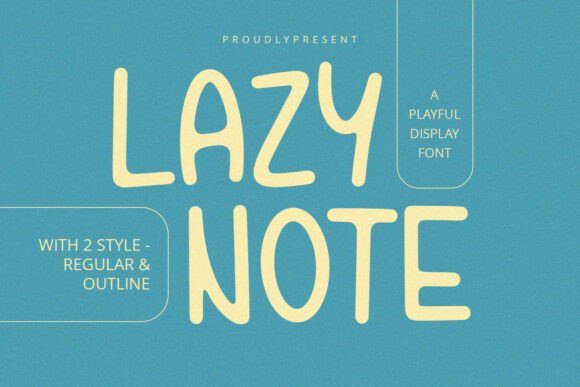
When it comes to choosing a typeface that adds character without sacrificing readability, Lazy Note stands out as a compelling option. This handwritten display font carries a relaxed, whimsical charm that works well across a variety of creative applications. Whether you're designing a brand identity, packaging, or digital content, Lazy Note offers a friendly tone that can help your work feel more personable and engaging.
Understanding the Style and Character of Lazy Note
Lazy Note is crafted with a loose, handwritten aesthetic that mimics casual penmanship. Its slightly uneven baseline and soft curves contribute to its informal, approachable look. Unlike rigid sans-serif or serif fonts, Lazy Note embraces imperfection as part of its appeal. This makes it especially effective when used in contexts where warmth and personality are more important than strict formality.
Its design includes subtle variations in stroke weight and spacing, giving it a natural, hand-drawn feel. These characteristics make it ideal for projects that aim to connect emotionally with an audience—think greeting cards, children's books, boutique packaging, or lifestyle branding.
Practical Applications and Use Cases
Lazy Note shines in design scenarios where a human touch enhances the message. It's particularly well-suited for:
- Logo design for small businesses and creative brands
- Product packaging that emphasizes craftsmanship or authenticity
- Poster and flyer design for events, workshops, or community gatherings
- Apparel and accessory branding, especially in casual or youth-oriented markets
- Magazine headers, blog graphics, and social media visuals that aim to be light-hearted and engaging
Professionals in branding, marketing, and editorial design may find Lazy Note especially useful when crafting visuals that need to feel personal and accessible. For example, a local bakery might use Lazy Note in its logo and signage to convey a sense of warmth and familiarity. Similarly, a lifestyle blogger could incorporate the font into quote graphics to maintain a conversational tone.
Quality and Technical Performance
Lazy Note is generally well-constructed, with clear letterforms that remain legible even at smaller sizes. While it's primarily a display font, meaning it works best in headings and titles rather than body text, it holds up well in both print and digital formats. Designers should be mindful of spacing and contrast when using it in layered compositions to ensure readability.
From a technical standpoint, Lazy Note typically includes standard character sets and supports common languages. However, it’s important to verify that the version you're using includes the full range of characters and ligatures needed for your specific project, especially if multilingual support is required.
Usability Across Platforms and Media
One of the strengths of Lazy Note is its adaptability. Whether you're working in Adobe Illustrator, Photoshop, or a web-based design tool like Canva or Figma, the font integrates smoothly. It also performs well in both print and screen-based media, making it a versatile addition to a designer’s toolkit.
For digital use, Lazy Note can be embedded using standard web font services, though performance considerations such as load time and browser compatibility should be taken into account. When used sparingly—such as for headers or callout text—it can enhance a website’s visual personality without compromising usability.
Design Considerations and Pairing Options
Because Lazy Note has a strong visual presence, it's often best used as a headline or accent font rather than for extended body copy. Pairing it with a clean sans-serif or a minimalist serif can help balance its playful nature and maintain readability in supporting text.
For example, combining Lazy Note with a font like Open Sans or Lato allows the handwritten style to stand out while keeping the overall design grounded. Designers should also consider spacing and alignment—Lazy Note’s irregular baseline may require manual adjustments to ensure visual harmony in multi-line text elements.
Who Benefits Most from Lazy Note?
Lazy Note is particularly well-suited for creatives and small business owners who want to inject a sense of warmth and authenticity into their visual communications. This includes:
- Entrepreneurs launching lifestyle or boutique brands
- Freelance designers working on client projects that require a personable tone
- Marketers creating promotional materials for events or community-driven campaigns
- Educators designing handouts or classroom visuals that need to feel inviting
- Bloggers and content creators producing graphics for social media or digital platforms
Those working in more formal industries—such as finance, law, or corporate communications—may find Lazy Note less appropriate unless used in a very limited, stylistic context. It's best reserved for projects where approachability and creativity are key to the brand voice.
Real-World Performance and Long-Term Value
In practical use, Lazy Note holds up well across different design environments. Its distinct personality makes it a go-to choice for designers who want to avoid generic, overused fonts while still maintaining clarity and charm. Over time, its value lies in its ability to help brands and creators stand out with a unique typographic voice.
However, as with any display font, moderation is key. Overuse of Lazy Note—especially in complex layouts or dense text—can diminish its effectiveness and impact. When used thoughtfully and in alignment with the project’s tone, it becomes a valuable asset rather than a stylistic gimmick.
Final Thoughts: When Lazy Note Fits the Bill
Lazy Note is not a one-size-fits-all font, but it fills a specific niche beautifully. If your project calls for a warm, handcrafted aesthetic and you're looking for a font that feels both expressive and legible, Lazy Note is worth considering. It brings a sense of playfulness and sincerity that can elevate your design beyond the ordinary.
Before incorporating Lazy Note into your next project, take a moment to evaluate your audience and message. If a relaxed, personable tone aligns with your brand or content, this font can be a powerful tool. But if your goal is to convey authority or precision, you may want to explore more structured alternatives.
In short, Lazy Note is a practical yet charming choice for designers who understand the importance of tone and personality in visual communication. Used with intention, it can help your creative work feel more human, more relatable, and ultimately more memorable.